
by Gijs Suy, during the MIOB LAB of Cultural, Creative and Festival Journalism at the European Film Forum Scanorama
In Vilnius' National Gallery of Art, Lithuanian-American filmmaker Jonas Mekas’ three-hour diary movie Lost, Lost, Lost (1975) is on permanent display; one damp Saturday afternoon in November I watched the film for as long as my schedule allowed. Mekas’ camera effortlessly foregrounds the beautiful but wistful intermezzos that are often suppressed by the struggles of daily life.
Ptitsa (2022), Alina Maksimenko’s debut short — showing at the Scanorama film festival in the city — opens with a brief sequence shot on 8mm that recalls Mekas’ approach and foregrounds a similar feeling. Maksimenko’s documentary about her mother Tatiana and herself is a vivid exploration of brief moments of beauty shining through the firmament of their stress-infused existence.
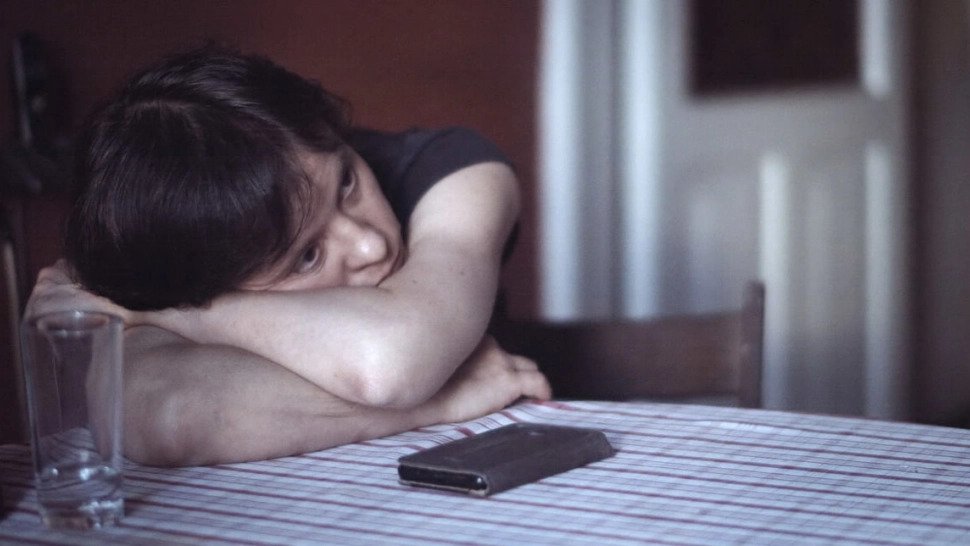
The Polish production (Maksimenko's graduation project at Wajda School) captures the duo cohabiting in a Kyiv apartment during the COVID-19 pandemic. She works on her paintings while Tatiana runs an online piano school, following routines that are more or less separate. Maksimenko’s camera thoroughly explores the spaces in which their quotidian existences take place, turning mundanity into something suggestive and interesting in a style reminiscent of the late Chantal Akerman. Maksimenko frequently uses frame-in-frame compositions, compressing the spaces in which the two women walk around and thus cutting them off from each other.
Physical distance is thematised in many other ways, such as the abundant use of mirrors and windows, which are often seen when Alina is talking on the phone to a friend she is unable to visit. The world surrounding them — which they almost exclusively perceive through the windows — becomes ghostlike.
Appearing through visual and aural impressions that scare and alienate them, the external realm pushes them back to the relative safety of their suffocating home. Another scene that expresses this idea of disconnect is when Tatiana listens to a heavily distorted song on her mobile phone as if her connection to the outside is somehow muffled. Near the end of the film Tatiana and Alina do manage to find some form of relation to each other via the story of the friend's daughter's death. They use this to attribute some sense of meaning to their own lives.
Equally important, however, is when Tatiana discovers her daughter’s expressionist paintings and unleashes her vivid imagination, passionately enthusing about them. Ptitsa — which means "bird" — consistently holds both a grounded and an uplifting view of art. The protagonists are allowed to discover realities both inside and outside themselves, briefly detaching mother and daughter from the bleakness of their situation.