It Happened Here

Introduction to Arnold Schoenberg's „Accompaniment to a Cinematographic Scene"

15 min. | Documentary, Experimental, History | Pegi 13

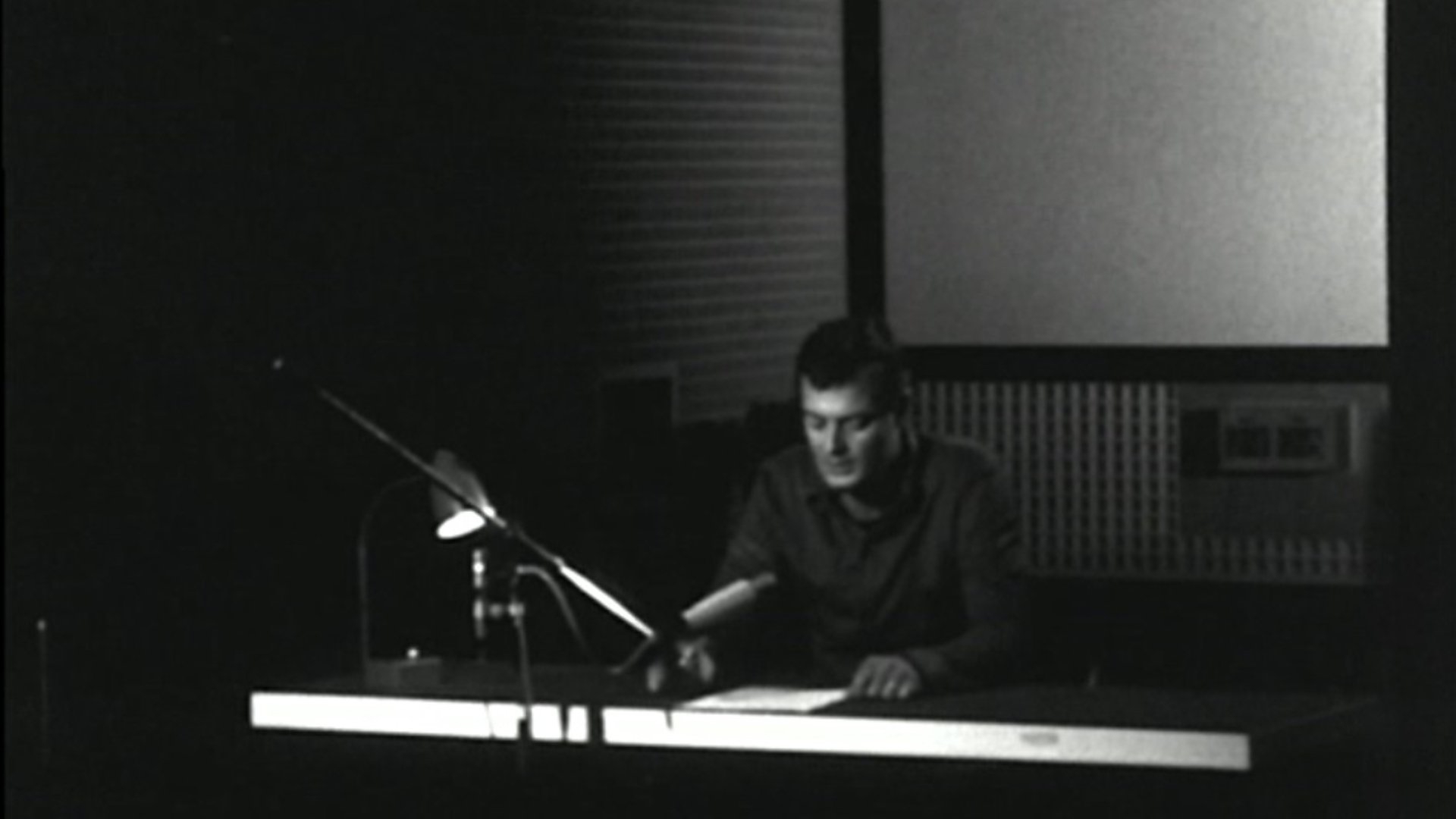
In 1923, sensing the gathering storm of “fear, danger, and catastrophe” in Germany, the composer Arnold Schoenberg wrote a devastatingly prescient and heartbreaking letter to his former friend, the painter Wassily Kandinsky. Schoenberg aligned his fate with that of all Jews, knowing they were soon to face exile or violent death. Straub-Huillet’s film, a recitation both of Schoenberg’s letter and Bertolt Brecht’s 1935 speech to the International Congress in Defense of Culture, is a fierce condemnation of anti-Semitism, German crimes against humanity.

Jean-Marie Straub

Jean-Marie Straub

The duo of French directors Jean-Marie Straub and Danièle Huillet is often defined as the most intense and controversial collaboration in the history of cinema. Nearly inseparable partners since 1954 until the death of Huillet in 2006, they worked intimately on every aspect of film production, from the script to the editing. They made films adapting the ambitious works of literature, visual arts and music: stories by Böll, Kafka, Duras, and Pavese; poems by Dante, Mallarmé, and Hölderlin; a play by Corneille, an essay by Montaigne, a film by D. W. Griffith, a painting by Cézanne, an opera by Schöenberg; the biography of Johann Sebastian Bach. Extremely attentive to the relationship between the image and sound, the directors used to interpret, rewrite and re-actualize the stories, layering them with the political narrative. Straub-Huillet's films reflect on the lessons of history, discuss imperialism, militarism, resistance and advance the Marxist ideas of the class struggle.
Danièle Huillet

Danièle Huillet

The duo of French directors Jean-Marie Straub and Danièle Huillet is often defined as the most intense and controversial collaboration in the history of cinema. Nearly inseparable partners since 1954 until the death of Huillet in 2006, they worked intimately on every aspect of film production, from the script to the editing. They made films adapting the ambitious works of literature, visual arts and music: stories by Böll, Kafka, Duras, and Pavese; poems by Dante, Mallarmé, and Hölderlin; a play by Corneille, an essay by Montaigne, a film by D. W. Griffith, a painting by Cézanne, an opera by Schöenberg; the biography of Johann Sebastian Bach. Extremely attentive to the relationship between the image and sound, the directors used to interpret, rewrite and re-actualize the stories, layering them with the political narrative. Straub-Huillet's films reflect on the lessons of history, discuss imperialism, militarism, resistance and advance the Marxist ideas of the class struggle.
Languages
German
Subtitles
English
Original title
Einleitung zu Arnold Schönbergs Begleitmusik zu einer Lichtspielscene
Produced
1972: Germany

Film information

Director
Jean-Marie Straub, Danièle Huillet
Cast
Günther Peter Straschek, Danièle Huillet, Peter Nestler
Festival experience toolkit by