The director talks about working with Isabelle Huppert, her fascination with the vampire figure, and the complex creative process behind one of her most ambitious projects. The film opens at the Scanorama Film Festival on November 6.
– I read a review claiming that this role seems to have been written especially for I. Huppert. As I understand it, that wasn’t actually the case. How did you create this extraordinary character together?
– I wrote the screenplay in 1998, and from the very beginning I saw the characters in pairs. It’s a well-known dramatic principle: a character becomes more compelling when paired with an opposite.
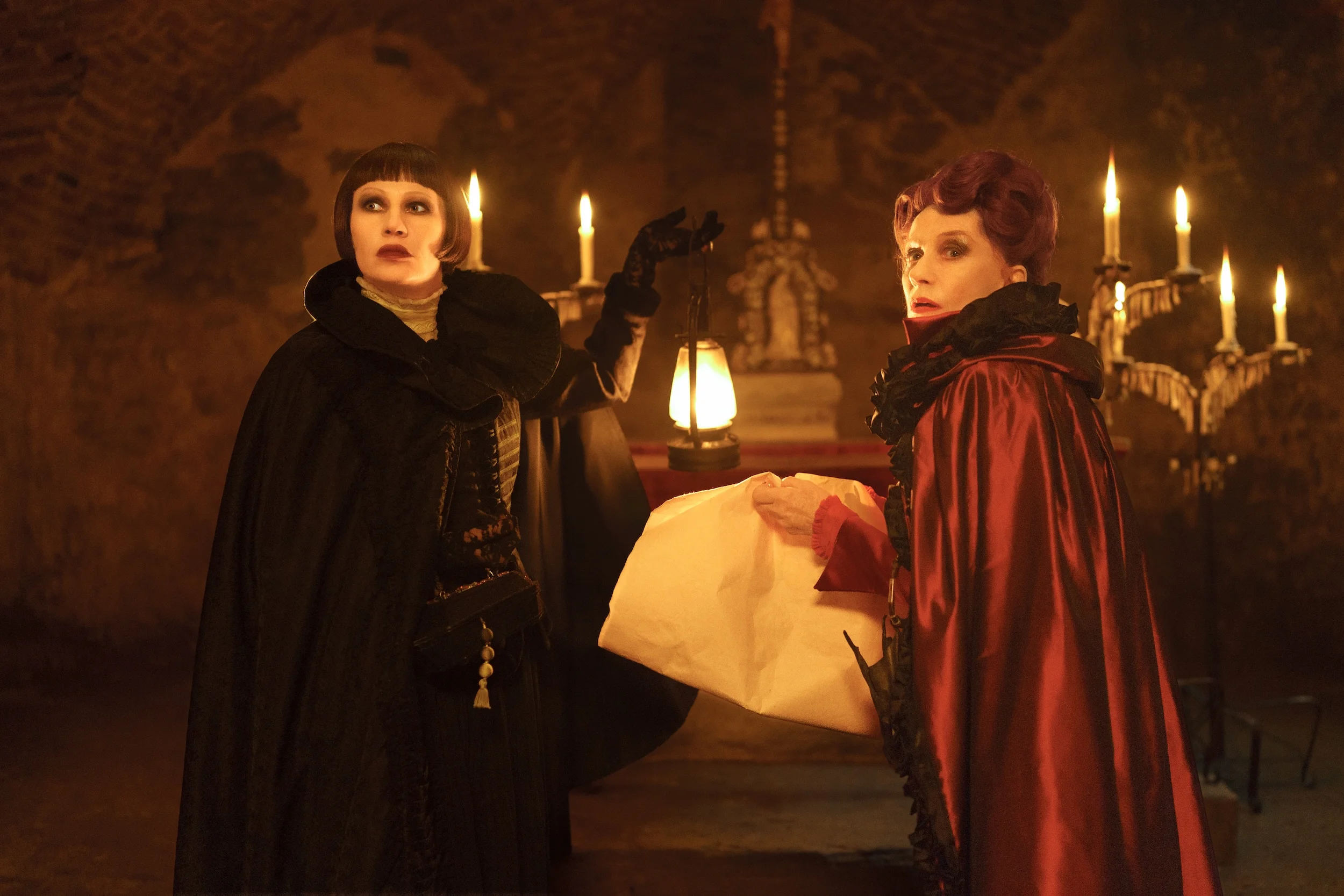
For example, there are I. Huppert and her maid, two vampirologists, a baron who dreams of becoming an ordinary person and eventually longs to die, as well as a police inspector and his assistant. Dramatically, all these pairs reinforce each other.
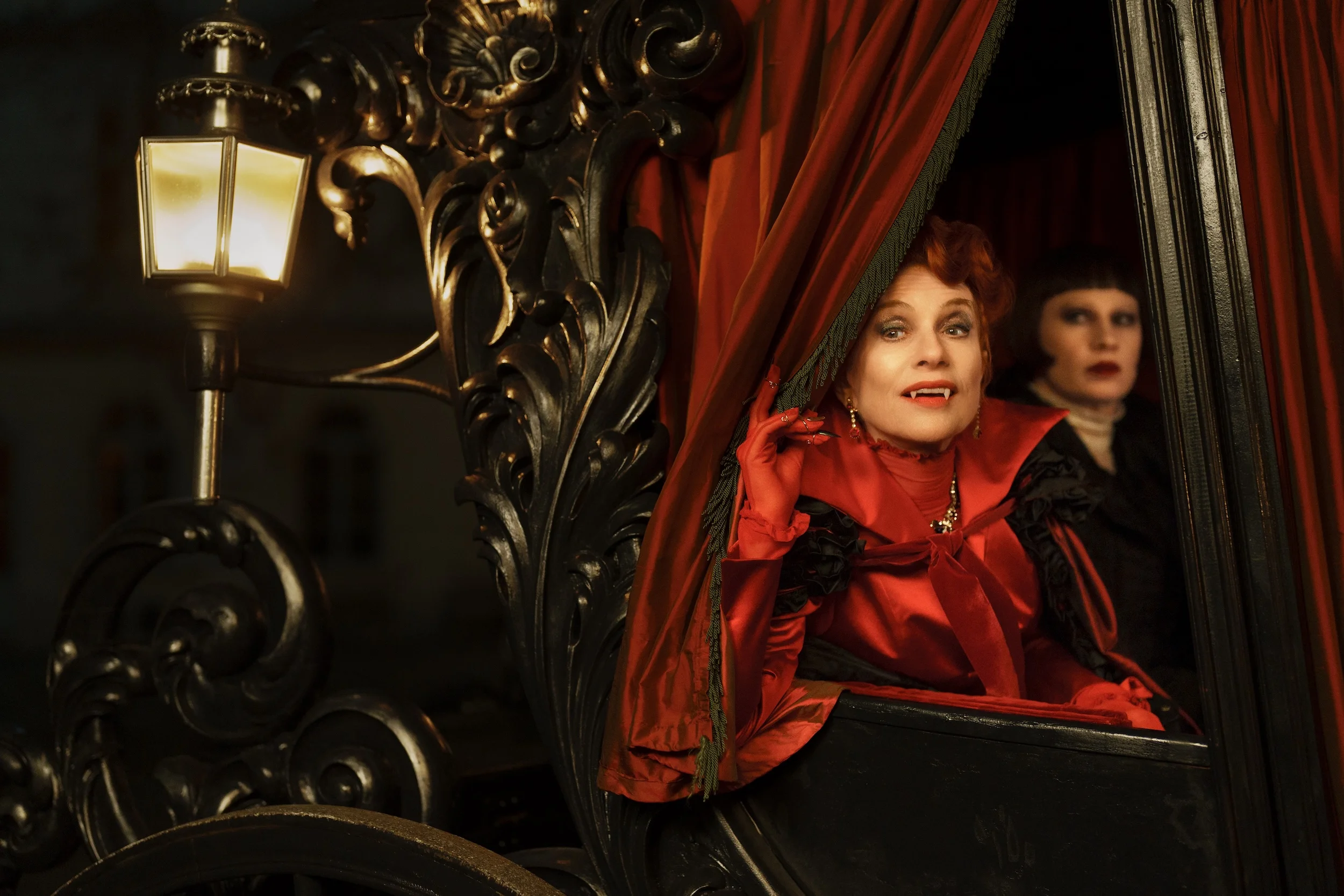
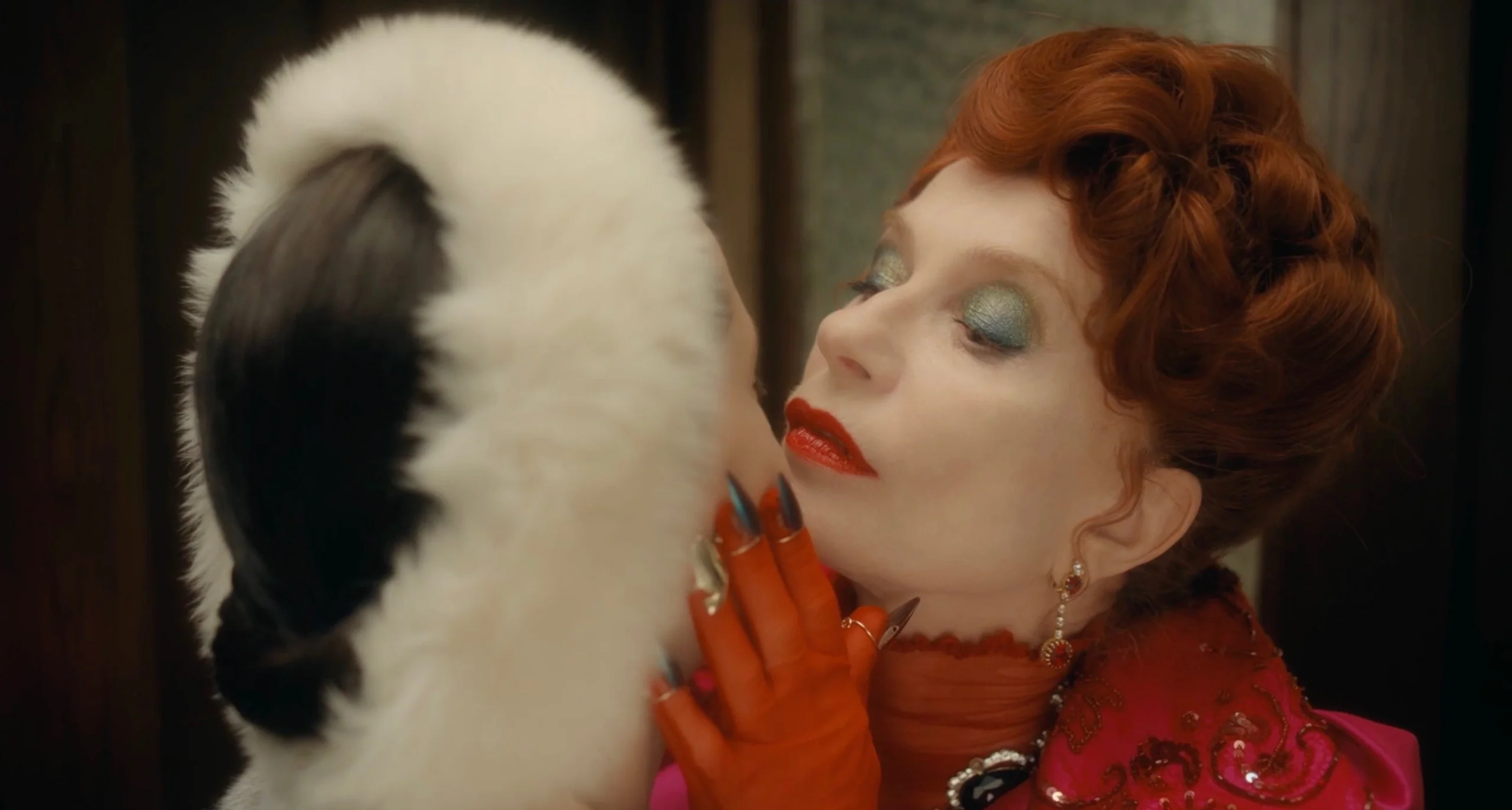
In Isabelle’s case, the process was especially interesting. She is used to playing highly psychological roles in which she forms emotional bonds with others. But here she embodies a character who feels no genuine emotional connection.
We talked about it a lot. At first she asked, “What should I do if I don’t have a real relationship with anyone?” I replied, “You are a figure. You enter as if walking down a red carpet. Your presence radiates: you enter, move forward, smile politely, but you don’t let anyone get emotionally close. It’s a performance. You manipulate everyone around you. You are powerful, decisive, and direct. All of this has to show in your face and gestures.”
It took two or three days for her to get used to this approach. But Isabelle is an extraordinary actress who can do anything. At first, it was still a real challenge, and I think that’s exactly the kind of challenge actors look for.
I was also lucky to work with excellent actors even in smaller roles. For example, the very well-known actor Klaus Birkhahn appears briefly among the older military characters. It was an interesting experience for everyone involved.
Lars Eidinger plays the “most normal” character in a way, but at the same time he is the strangest of them all. He is an anti-therapist. At the beginning of the film, when Isabelle arrives at the hotel, psychoanalysis is discussed and contrasted with newer forms of behavioral therapy—more pragmatic and direct.
I like working with these kinds of contradictions—not only in pairs of characters, but also in their relationship with their surroundings. In my films, locations also become characters: there is a visual dialogue between the characters, the spaces, and their histories.
– The film has very striking visual contrasts, especially when it comes to costumes and colors. Costumes seem to play an important role in your work. How did you create them for this film?
– If you visited my home, I would show you several versions of the screenplay. I created the first one after returning from my travels, during which I discovered many of these locations.
It’s not just a screenplay with dialogue. It also contains photographs I took, sketches of props and costumes, reproductions, and visual references. It’s a comprehensive visual archive for every character—from the embroidery on the costumes of the young green vampire and the rebellious family member to the elaborate, meticulously considered clothes for Isabelle’s character.
I worked with costume designer Jorge Jara for about a year. I chose him because he comes from South America and has a strong understanding of Baroque aesthetics, especially the Catholic Baroque tradition, which was very important for this film.
It was an exceptional collaboration—as was the one with the production designer. For six months before filming, we worked in two separate studios: one where the costumes and makeup were created, and another where the world of the film was built—the ship and other sets.
Everyone had access to the visual materials in the book I had prepared. I was constantly moving between the two spaces, discussing details with carpenters, artists, and other members of the crew.
I was very happy with the whole team. Everyone wanted to demonstrate their creativity, propose ideas, and develop them. After all, it’s not enough simply to have ideas—you need to find people capable of bringing them to life. In this case, everyone was highly competent and strongly motivated. We all found it very rewarding, even though the schedule was extremely tight and demanded intense concentration.
– The film has a very distinctive, pronounced irony. Does it come from Elfriede Jelinek, or is it more shaped by your own perspective?
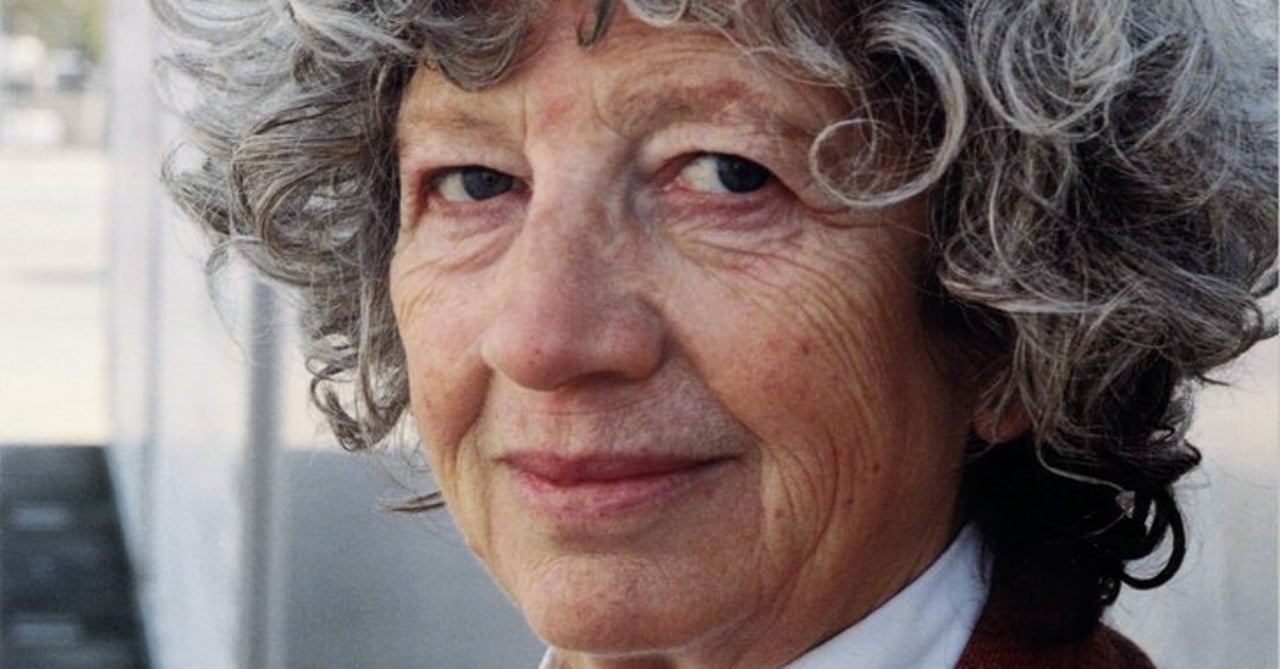
– There is a certain misunderstanding about that. I wrote the entire screenplay and all the dialogue myself. Later, I contacted E. Jelinek, whom I know well because I’ve staged several of her plays.
I felt that some parts of the dialogue lacked a specifically Austrian tone, so we sat down together and went through the screenplay. For example, I asked her to write the mayor’s speech, which, unfortunately, we eventually didn’t film because of a lack of time.
That was her only direct contribution. Still, she later kindly sent me several pages of textual fragments—a kind of collage of advertising, everyday speech, and other sources.
I later incorporated some of them into my screenplay—some in part, while I removed others entirely. The final result is a combination, but essentially it is still my work. It’s like a montage in which different elements merge not only at the level of language, but also at the level of structure.
– The film is multilingual—French, German, and other languages are spoken in it. How did that affect your work?
– It reflects our reality. We come from different countries, and now we’re speaking English. I could express myself more precisely in German or French, but I adapt—as you do.
Ideally, Isabelle would have spoken more German, but that wasn’t possible because of the very limited shooting schedule—just thirty days.
Still, the presence of several languages in the film—including Hungarian and Russian—reflects the historical context of Austria-Hungary, where many languages coexisted: Czech, Ukrainian, Romanian, Bulgarian, and others.
I prefer the original multilingual version with subtitles, but dubbed versions are essential in some countries. I was especially impressed that Birgit Minichmayr learned French for this role. We even rehearsed her lines together in the evenings.
– Why do you think the vampire myth remains so potent and continues to fascinate audiences?
– I think it has to do with the fundamental human need to look death and fear in the eye. The figure of the vampire lets us, in a way, tame this anxiety.
The aspect that interests me most is time. For vampires, the past, present, and future lose their usual meaning. This allowed us to move through centuries in the film and explore the history of various places and architecture.
In my earlier work, I often turned to iconic figures—such as Dr. Mabuse, played by Delphine Seyrig, or literary characters, like Orlando and Dorian Gray, played by Veruschka.
I like working with established genres—for example, I drew on the pirate genre in one of my earlier films—but also transforming them and not following their rules literally. The same applies here: the vampire genre becomes a kind of framework that can be reimagined in unexpected ways.
– I have a question that’s of personal interest to me. We talked about Vienna, but were there other places you wanted to include in the film?
– Yes, of course. I really wanted to shoot in Bohemia too—I discovered some extraordinary places there. For example, an old Baroque theater that is still fully operational. Its sets can be changed in a matter of seconds using mechanical devices alone.
It’s amazing. In an instant, the stage can change from a park to a seaside, and from the seaside to a prison. Around fourteen people work beneath the stage, operating all these mechanisms. The whole thing is incredibly complex and precise.
I really wanted to film there, but unfortunately the budget wouldn’t allow it. So we had to look for alternatives and other solutions. In the end, everything worked out very well, but I still regret missing those locations—I know how unique they are.
– Like many vampires, the Countess sustains her life by feeding on others. Do you see a political meaning in this—perhaps a reflection of power structures that sustain themselves by exploiting others?
– The film raises an interesting question: why are we more drawn to cruel, radical personalities than to ordinary people? Darker characters seem to affect us much more strongly.
When people think of the Blood Countess, they immediately plunge into extreme, often disturbing fantasies—for example, imagining her bathing in the blood of young women to preserve her youth.
This is very directly connected to today’s society’s obsession with optimizing the body and preserving youth. The wealthy devote enormous resources to trying to outwit death, even though in the end there’s no escaping it.
To me, it seems like a kind of hubris—the belief that eternity can be bought, even if it means resorting to morally questionable or even horrific acts. It goes against human nature.
This obsession is deeply rooted in our society, and I find it very interesting. In my films, it’s especially important to me to show how such social structures work.
– One of the film’s most unexpected moments is Conchita Wurst’s appearance. Why did you decide to work with her?
– It was a fairly organic process. At first, I was thinking of a well-known song that would suit the film’s tone. I initially considered a song by Françoise Hardy—it’s familiar to people of my generation.
Then I thought of C. Wurst. “Rise Like a Phoenix,” performed at Eurovision, was simply perfect for this film.
So I contacted her agents and got a reply within a minute saying there was interest. We arranged to meet in Vienna, where I was working on the film at the time.
We met at the well-known Aida café—it’s very distinctive, all shades of pink and purple, full of sweetness and charm. We immediately felt that we understood each other.
At first, I intended to offer her just one role, but in the end I gave her three—she impressed me so much. Conchita is incredibly precise and dedicated. She even studied Russian for the role and performed everything flawlessly.
We filmed the vampire ball scene all night, and at six in the morning she was still completely focused and professional. It was her first film role, and she was wonderful.
Lithuania’s largest autumn film festival, Scanorama, takes place in Vilnius, Kaunas, Klaipėda, Šiauliai, Alytus, Panevėžys, Marijampolė, Visaginas, Vilkaviškis, and Gargždai from November 5 to 22. More information: scanorama.lt.