
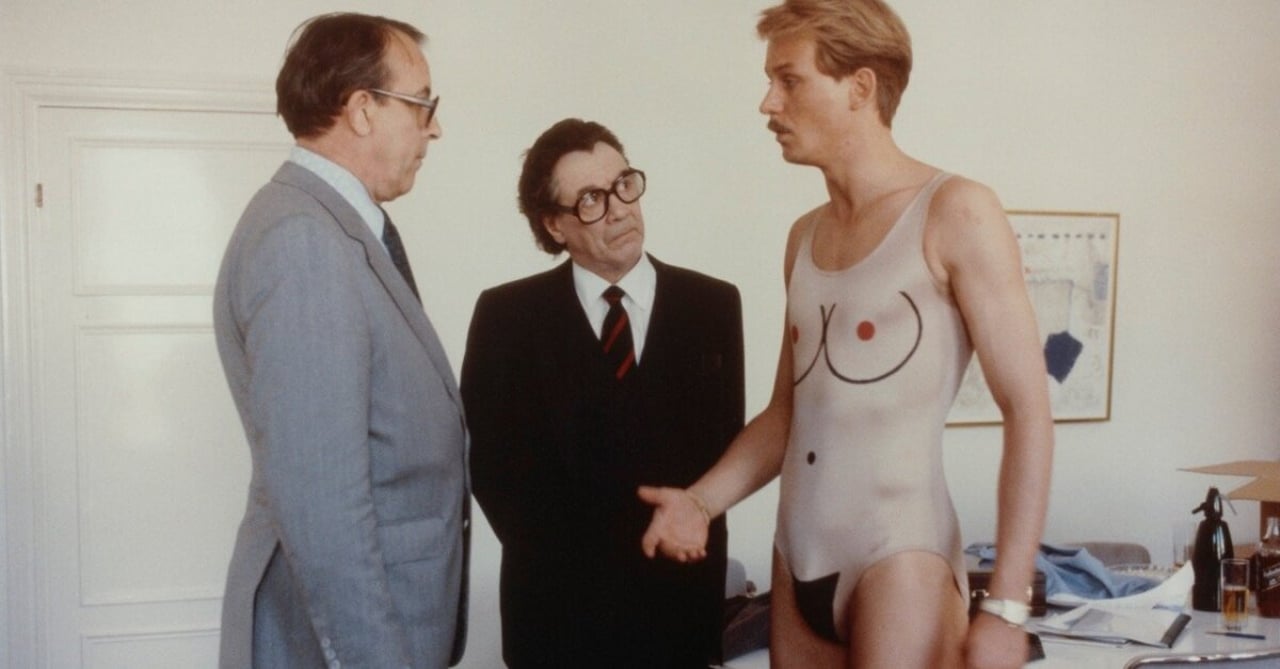
This year, the European Film Festival Scanorama will offer a conceptual look at retrospectives devoted to cinematic figures, bringing together filmmakers who have earned international recognition but remain little known in Lithuania: Hungarian director Márta Mészáros (b. 1931) and Swedish filmmaker Hans Alfredson (1931–2017), according to a festival press release.
“After presenting many powerful personal and thematic retrospective programmes that invited audiences to reflect on cinema’s many voices and its relationships with other art forms, this time we decided, together with film archivist Aleksas Gilaitis, to bring together two creative perspectives that at first glance seem incompatible. Different parts of Europe, reflections on different cultural experiences. The confessional theme that shapes M. Mészáros’s work and H. Alfredson, an icon of ironic and macabre comedy, come together in a surprisingly harmonious cinematic conversation.”
M. Mészáros: the intersection of personal choices and power
The personal biography of Hungarian director M. Mészáros is marked by confrontations between individuals and political systems, as well as early losses. When her communist father sought to escape dictatorship in their native Hungary, her childhood unfolded in the Soviet Union.
In the 1930s, when Stalinist purges began, the future director’s father disappeared, and soon the girl lost her mother as well. After completing her film studies in Moscow, M. Mészáros returned to Hungary to live and work. In 1960, she joined the fourth group at the Mafilm film studio, where she met film director Miklós Jancsó, who later became her husband.
M. Mészáros’s early career was marked by various forms of documentary filmmaking. In 1968, she decided to enter the realm of feature films with The Girl, becoming the first woman film director in Hungary. Her work is characterised by a combination of autobiographical motifs, fiction and documentary filmmaking, social and political themes, and bold formal experimentation. Her films often centre on a fractured family microcosm and the attempt to restore its disrupted order.
The retrospective presented at Scanorama opens with Adoption (1975), which won the first Golden Bear awarded to a woman director at the Berlin Film Festival. The film portrays the relationship between two women of different ages and fates, precisely conveying the social and political intersections that shaped women’s reality at the time in matters of love, marriage and motherhood.
The so-called diary trilogy, comprising Diary for My Children (1983), which received the Grand Prix at the Cannes Film Festival, Diary for My Loves (1987) and Diary for My Father and Mother (1990), explores key themes in M. Mészáros’s work: the gulf between ideals and reality, the alienation of different generations, and the breakdown of the traditional family.
Themes from the diaries continue in the director’s later film Aurora Borealis (2017). Complex relationships between family members, gender roles reflecting personal and social tensions, traumas of the past and the reality of post-war Hungary: the film revisits the director’s principal motifs, bringing together different stages of her artistic career.