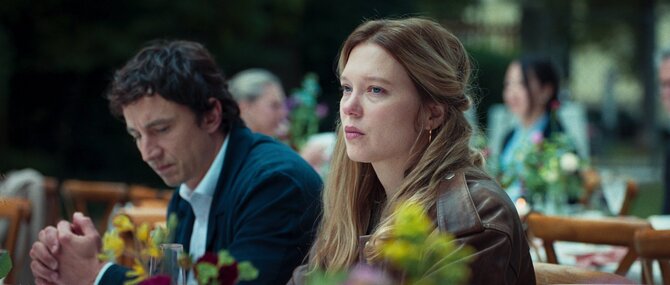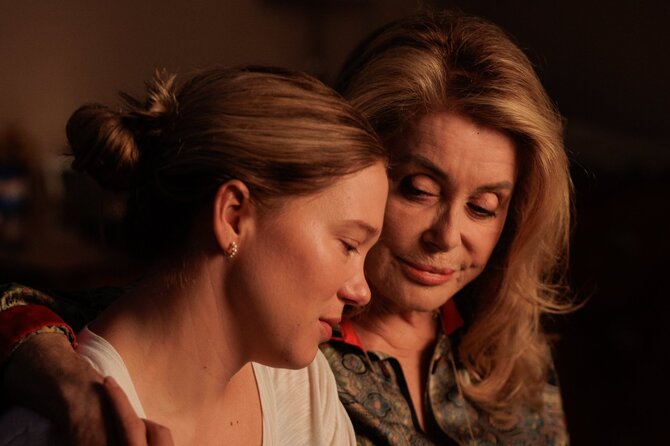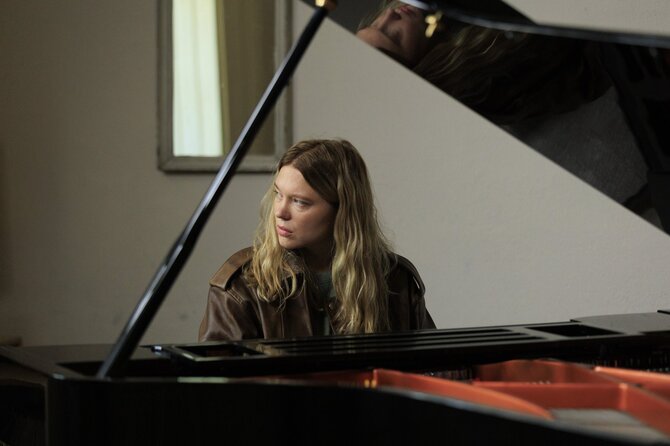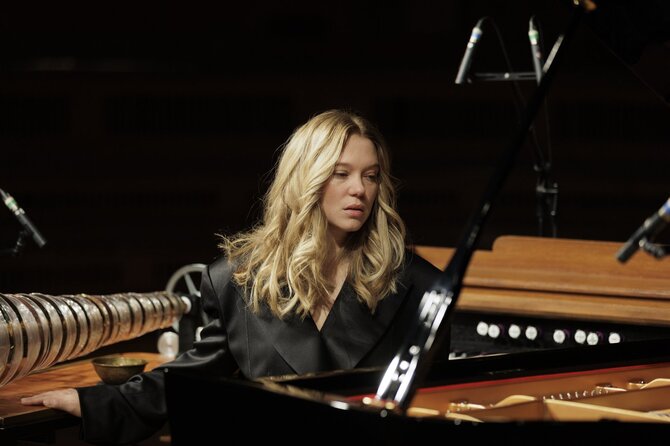
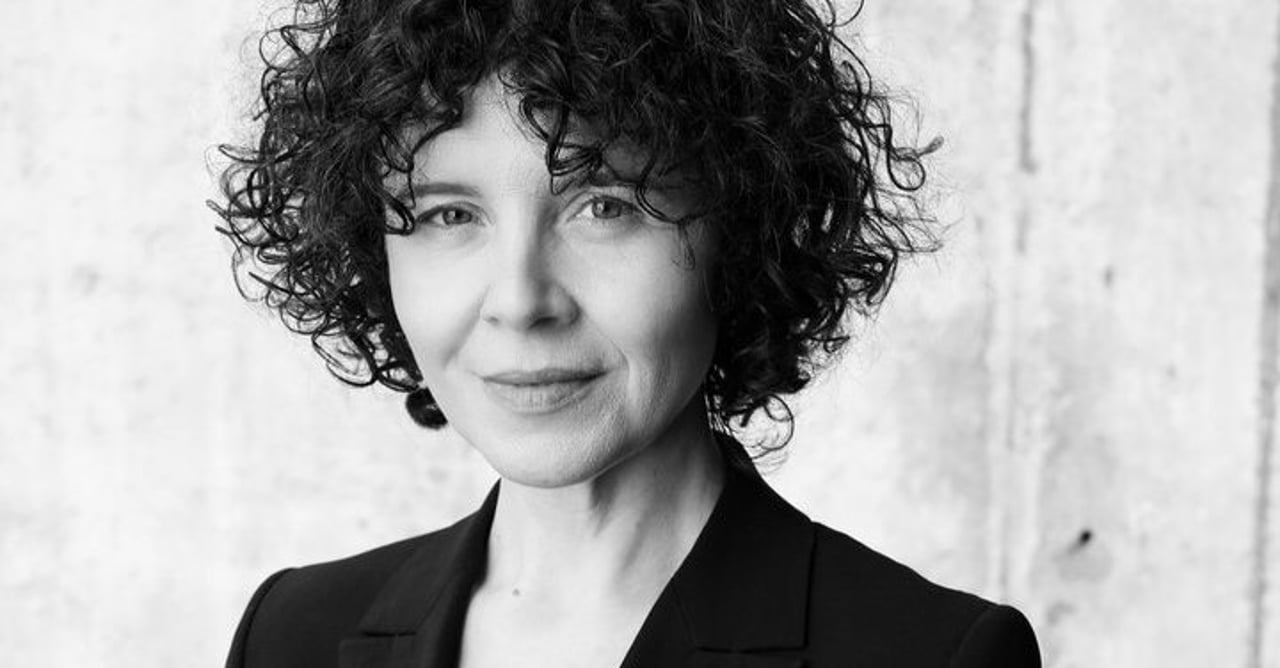
At the Cannes Film Festival, film critic Natalija Serebriakova spoke with director Marie Kreutzer on behalf of “Scanorama.” Kreutzer’s film “The Gentle Monster” – a harrowing family drama about the consequences of abuse – was selected for the official competition and competed for the Palme d’Or.
“The Gentle Monster” will screen in Vilnius on November 6 and in Klaipėda on November 7. The “Scanorama” film festival will take place across Lithuania from November 5 to 22 – for more information, visit scanorama.lt.
– Do you think people who experienced sexual abuse in childhood do not always recognize themselves as victims? That they may not understand they were abused? Have you looked into this subject?
– Victims – especially children – respond to traumatic experiences in very different ways. Some are deeply wounded by them; others find ways to live with them. There is no single pattern, no one reaction that applies to everyone. If there are no clear signs, it is not always possible to tell whether a child has been abused.
It is an extremely sensitive matter: if a child is asked too many leading questions, they may start repeating what they think they are supposed to say, or even develop false memories. That is why, in some cases, establishing the truth is extraordinarily difficult.
What is especially painful is that many children are abused so early that they do not even understand it is wrong. It becomes normal to them.
A police investigator once told me about a girl who had been identified many times in videos of sexual exploitation circulated online. When she was finally found and taken out of that environment, she felt devastated rather than relieved. She wanted to go back because those people were the only ones she knew and loved. It is almost impossible to comprehend, but that life had become her familiar reality.
I have also read survivors’ testimonies: later, they said they understood the abuse as something they had to endure in order to receive love or tenderness afterward. They would mentally dissociate, wait for it to be over, and then return to what they considered “normal.”
Understanding all of this is inhumanly painful.
That is why I emphasize the importance of prevention so strongly. The most important thing we can do is talk to children about boundaries from an early age, in ways that are appropriate for their age, of course: what is acceptable and what is not, who is allowed to touch them and who is not. This helps children understand when boundaries are being crossed and what words they can use to talk about it.
Because children rarely say, “This person touched me inappropriately.” Instead, they might say, “I don’t want to go there anymore,” “Something feels strange there,” or “I don’t like that person.” Adults need to learn to recognize and understand these signals.
Yes... as you can see, I have read and heard a lot about this subject. I could talk about it for a very long time.
– In light of all this, I have a question about the young actor who plays Johnny. How did you work with him, given the sensitive nature of the subject? Did he understand the relationship between his character and his father? How did you handle his emotions on set, and how much of the full script was he familiar with?
– That is a very good question. Of course, it was an extremely sensitive situation in every respect.
– Did he know in advance what the film was about, or did you handle that differently?
– Let me explain. When we were looking for an actor for the role, his parents were informed about the subject of the film. In fact, we informed all the children’s parents. At first, we received self-tapes from them, then selected about ten or twelve children we wanted to meet in person. I personally called all their parents and told them the story of the film. I said that if they felt uncomfortable coming to the audition, I would completely understand. I encouraged them not to rush into an answer and to take the time to think it over.
In the end, all the families except one said they understood the importance of the subject and wanted to continue with the audition process.
Once we had chosen Malo for the role, I spoke with his parents again about how to discuss the situation with him. We considered what would be appropriate to tell him and what would not. They thought it through carefully and suggested explaining the story to him in words he could understand. Since he had already asked what the film was about and what his role would be, they decided to tell him it was a story about parents going through a very difficult crisis who might get divorced. This made sense to him because he knew other children whose parents were divorced.
However, they decided not to tell him about the abuse. He was seven or eight at the time and had not yet encountered subjects like this. His parents felt it would be too difficult for him to understand and might affect his behavior, especially when interacting with the actor playing his father. It was very important to us that he remain natural and unrestrained in those scenes.
His parents trusted us, and we also worked with an excellent child-welfare specialist who was there throughout and looked after his well-being. She accompanied him even during a photo shoot for the media. Her role was not to protect him from us, but to reassure the family and show them that we took this responsibility very seriously. She also made sure we did not overburden him or cross any boundaries in terms of workload or emotional demands. Given the subject of the film, that kind of care was simply essential.
– There is also a scene in which the father appears naked. How did you film it, given that there was a child among the actors?
– We had to follow very strict rules. A child actor cannot be in the same room as a naked adult actor. So the scene had to be carefully choreographed: the boy leaves the room first, and only once he is no longer there does the adult actor remove his towel. Everything was meticulously planned to comply with these requirements.
– Pedophilia is such a sensitive and explosive subject today that any association with it can cost politicians their careers. For example, in Hungary, the scandal over granting a pardon to someone who helped cover up a pedophile’s crimes triggered a serious political crisis. So I have a question: when did pedophilia become so universally condemned – a crime that almost everyone considers one of the worst?
– First of all, I was just in Hungary recording additional dialogue with Lea, because she was filming there at the time. To answer your question, I think pedophilia has always existed – for as long as human beings have existed. What has changed is our awareness. That does not necessarily mean we are better at dealing with it or solving the problem. As a society, we are still doing far too little.
The question of pardons is very complicated. My first reaction would be to say no. But at the same time, we cannot simply erase these people from the world. And here, I think, it is essential to make a distinction: we are talking not only about pedophiles, but about people who commit crimes. There are people who live with these attractions but never act on them. It is important to acknowledge and respect that.
We need to be very clear: we are talking about people who have committed crimes. In such cases, we need to find ways to work with them – to provide therapy or other support so they can live in society without harming others. Because, as I said, we cannot simply make them disappear. They did not choose their condition, but they did choose to abuse another person, and that is unforgivable.
– Was this idea one of the reasons you chose to tell this particular story – about someone who discovers that a person close to them is a pedophile, but cannot simply switch off their feelings?
– Yes, I think many people can relate to that. Perhaps not at such an extreme level, but we have all been hurt or disappointed by people we care about. And even when someone hurts us deeply, we cannot simply switch off our feelings and forget them in an instant. It takes time. Understanding our feelings and letting them go always takes time.
Even if someone does something terrible, they are still the same person they were yesterday. That inner conflict does not simply disappear in an instant.
The story’s perspective – that of a woman who discovers her husband is an abuser – came to me after I read a newspaper article. It made me realize just how widespread this problem really is. I thought: I must know not only victims, but have also met perpetrators.
And when you start looking into cases like these, you begin to see recurring patterns. For example, quite a few women stay with their partners or go back to them even after the men have served time in prison for such crimes. That is simply a fact. I am not judging it, just stating it. It is hard to understand, but it happens.
I wanted to tell the story from her perspective so that viewers could discover the truth along with her – trying to understand, or realizing that understanding is impossible. At the same time, perhaps she herself does not even want to know; perhaps she just wants it all to disappear. These are very human reactions. Sometimes it is easier to invent another explanation than to face a truth that is too painful to accept.
– Some of the stylistic elements in your film are reminiscent of Michael Haneke. Did he influence your work?
– I think every film you see affects you in one way or another, and of course I have seen all of his work. So perhaps there is some indirect influence.
– Your film has a distinctive emotional contrast – a combination of intense feeling and a certain coldness. It brings his work to mind.
– That is a very good comparison. He is a wonderful director. I greatly admire the complexity and depth he gives his characters.
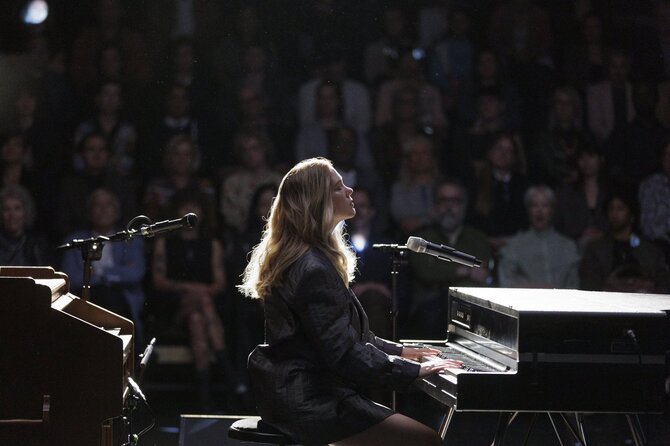
– Was it always your intention for the main character to be a pianist and singer?
– Yes, that was my idea. I wanted her to be both a pianist and a singer, and both main characters to be artists. At first, I simply wanted to create a couple I could relate to – people who could be part of my own circle, since many of my friends are involved in the arts in one way or another.
There was also a personal aspect. I have always admired people who can play the piano, and I do not have a singer’s voice myself, so through this character I could, in a way, get closer to that world.
The musical thread became even more prominent when I realized that many well-known love songs had been written by men. It became an interesting thematic thread in the film, so I decided to connect it to the character’s profession.
– You mentioned realizing that you have probably met abusers in your own life, too. What did you feel when you learned about that particular case?
– It was awful and deeply shocking. It came as a shock to everyone it affected. The reactions were similar to those I show in the film: some people refused to believe it, saying it could not be true because that person seemed so kind.
For me personally, the most important thing was that I had no personal connection with him, so in that sense it was not emotionally painful. But I was still deeply shocked.
– How did that experience affect your work on the film?
– At first, I thought that because of that case, I might no longer be able to make the film. But after some time, I realized that it had actually strengthened my conviction that this story needed to be told. What happened in real life echoed the main character’s experience in the film, albeit in a much milder form.
The situation also helped me understand even more clearly just how sensitive this subject really is. Before that, I knew it was complicated, but I had not fully realized how difficult it is for people even to talk about it. Then I understood more clearly that society considers it one of the gravest crimes.
– Why do you think it is viewed that way?
– Perhaps it is not entirely appropriate to rank crimes by severity, but it is very difficult to comprehend how an adult can harm a child in this way. It is an extreme abuse of power and trust.
Of course, there are many terrible crimes in the world, and I would not want to diminish any of them.
– Do you think it is because the most sensitive things are violated here – a child’s innocence, family ties, especially when the abuse takes place within the family?
– Yes, I think it has to do with the most fundamental abuse of power over another person. The desire to control others is at the root of many problems in the world, and in this case it happens in an especially intimate and vulnerable context.
– How did you invite Catherine Deneuve to join the film?
– After my previous film, many actors approached me. I was surprised and even a little overwhelmed. Then I realized that I could also reach out to actors directly myself.
For this film, the role was originally written for a character who was not of German origin, and an American actress was attached to the project for a while. When she left, Lea was suggested to us. I had not initially thought of her, but when I began to consider it, I realized she was perfect for the role.
She read the script and immediately wanted to join. We had a brief video call, and I understood almost at once that she was the right choice. Casting is often an emotional decision – you have to feel a connection, especially when you know you have a long and close working relationship ahead of you.
Everything came together quite naturally with C. Deneuve. Lea had mentioned before that she would like to work with her, so we decided to get in touch. After reading the script, she was interested and agreed to join. It all went very smoothly.
– Was she demanding during filming?
– She has clear boundaries around her schedule, which is completely understandable. But she was very sincere and friendly with the entire crew. It was a real pleasure to work with her.
– Why was it important to you to include the investigator’s and her father’s storyline?
– While researching the film, I was deeply impressed by the investigators’ dedication to their work. I wanted to show their everyday lives and include a more pragmatic perspective to contrast with the emotional arc of the main character.
This storyline also broadens the scope of the subject. If the film focused only on one family, it might give the impression that this was an isolated case. Showing the investigator’s daily work makes it clearer just how widespread the problem is.
The storyline involving her father serves several purposes. It shows that even people with clear moral principles do not always manage to do the right thing in their personal lives. Although she is deeply committed to her work, within her own family she avoids looking at certain problems.
– Was the investigator’s character based on a real person?
– No. The case that inspired the film involved a large network, and many investigators worked on it. This character is not based on any one particular person.
– You mentioned earlier that education is very important. Who do you think should be responsible for it?
– I think it should happen on several levels – in schools, kindergartens, and all institutions where children spend time. Parents of course have a very important role to play, but institutions can ensure that education is consistent and systematic.
There are various ways to talk about it. I am not a politician or an expert in this field, but I have thought about possible initiatives. For example, police officer Jella and I talked about a short educational video that could be made in collaboration with a child-protection organization. It could be shown in kindergartens and schools, explaining in an age-appropriate way what boundaries no one has the right to cross. Since Jella is a well-known public figure in Germany and Austria, her involvement could have a significant impact.
I am sure other people are already taking similar initiatives, but overall, this subject still receives too little attention. Many people avoid talking about it because it is uncomfortable and difficult. I felt that very clearly.
That is why I am grateful that we are here. Film events could also shy away from such difficult subjects, but this festival does not run from challenging stories, and I appreciate that very much.
Lithuania’s biggest autumn film festival, “Scanorama,” takes place in Vilnius, Kaunas, Klaipėda, Šiauliai, Alytus, Panevėžys, Marijampolė, Visaginas, Vilkaviškis, and Gargždai from November 5 to 22. More information: scanorama.lt.