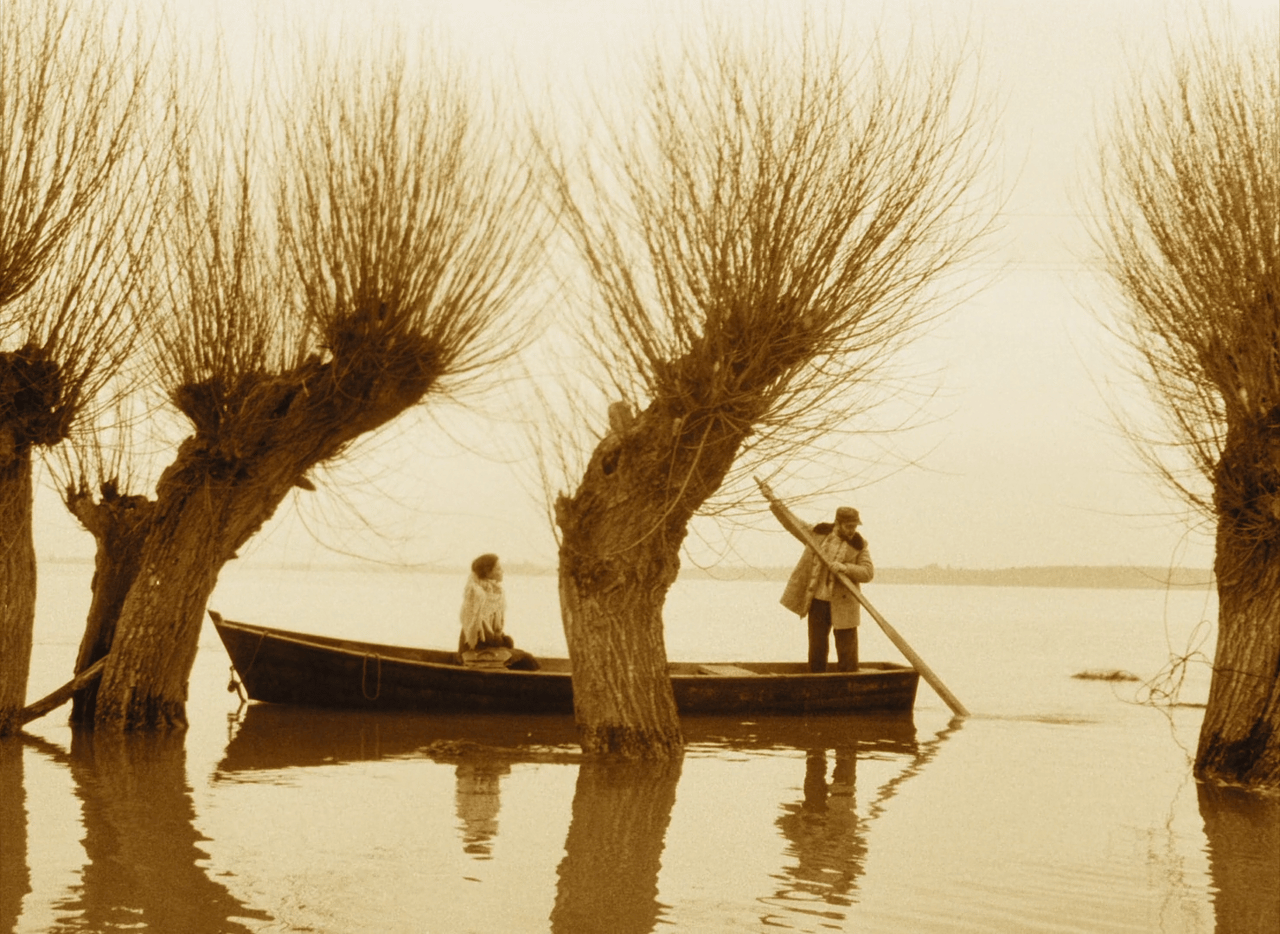
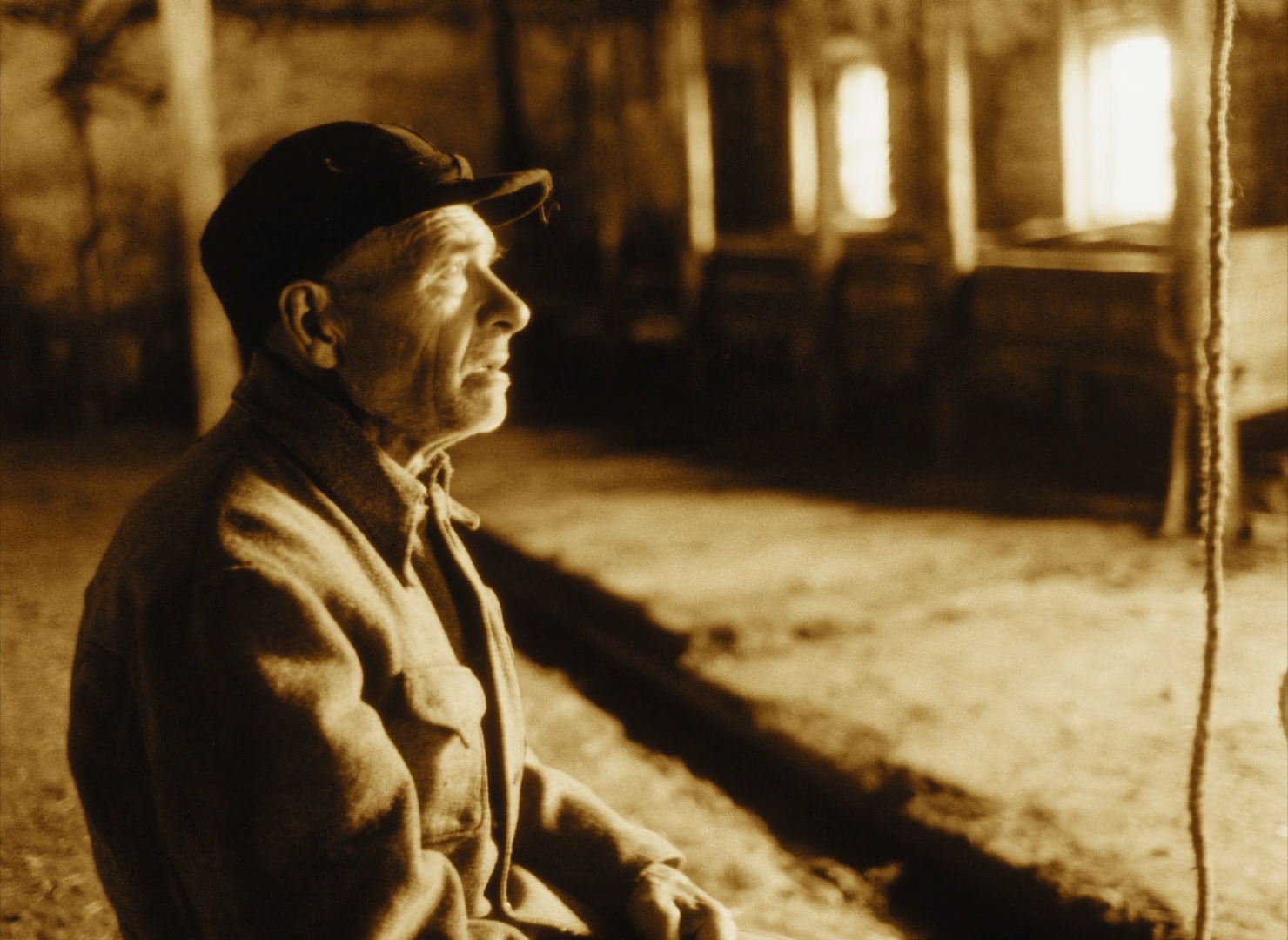
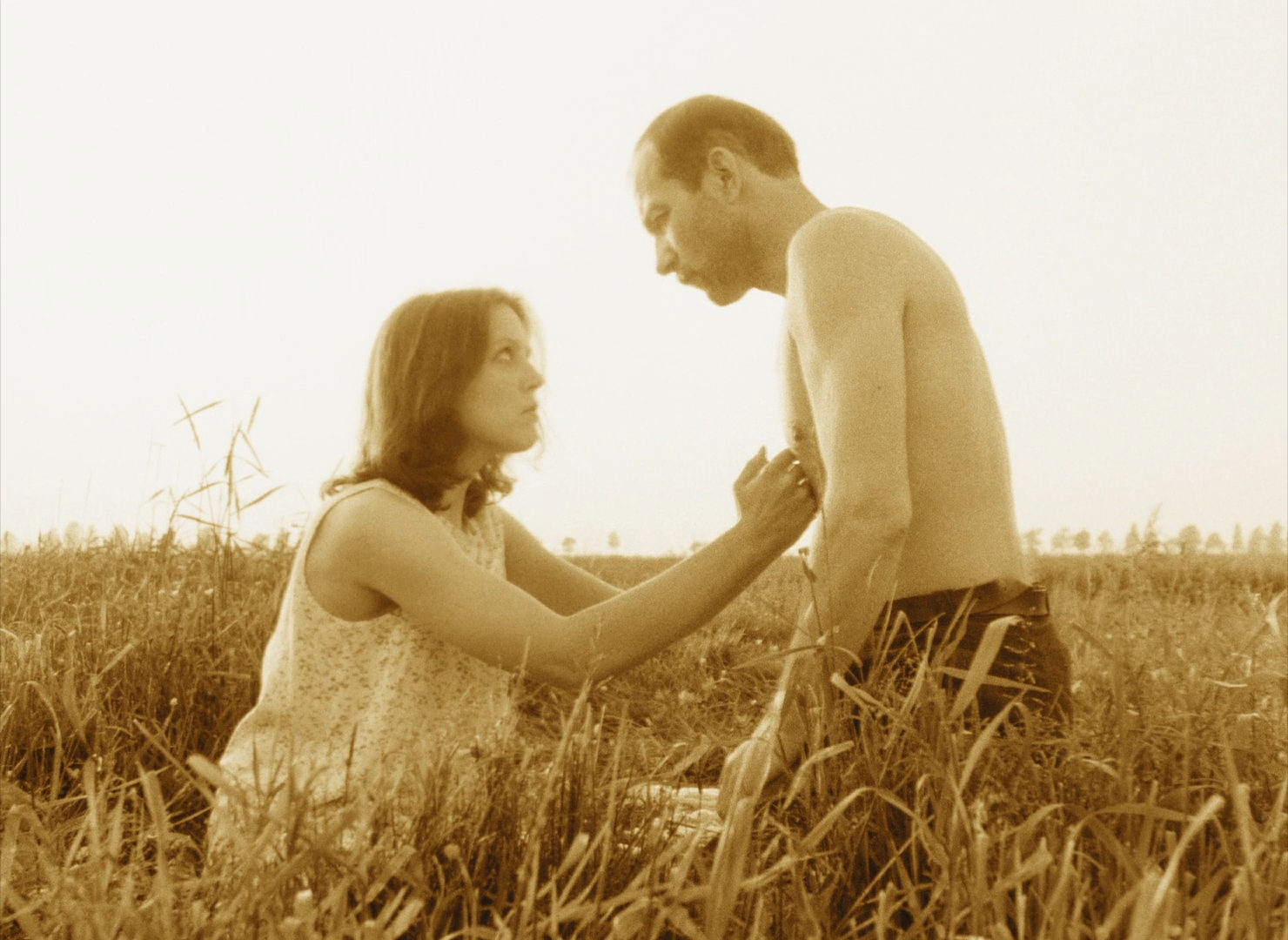
In the late 1940s, spring floods engulf the villages of Lithuania’s coastal region. People wade through the water and travel by boat. One boat brings a travelling cinema to the village, screening the pseudo-historical Russian-language film Minin and Pozharsky. Among the projectionists is a young woman named Amilia, who immediately catches the eye of both the surveyor Anicetas – despite the fact that he already has Pranė, who is devoted to him – and the mechanic Zigmas, a cheerful fellow who constantly mixes up Lithuanian and Russian words, at one moment declaring that “the collective farms are kaput,” and at another urging Anicetas to campaign for tractors. Offended, Pranė attempts to hang herself, or at least to pretend to be a hanged woman. These are confusing times, and everyone seems lost. Amilia is haunted by the memory of her parents, both teachers, being killed before her eyes during the war. Police officer Piotras Sergejevičius is tormented by his inability to tell friend from foe. Only the village’s old philosopher Bernasius retains hope, at least for a while, naming a newly born foal Debesiukas..
After visiting Amilia in the remote village of Maldeikiai, Anicetas takes her to the town to register their marriage. But the family does not hold together. Amilia’s actions are inexplicable, as is her unexpected passion for gambling. In the crumbling village, everyone drinks, dutifully goes to Soviet elections, and mourns the fate of the horses, which, they are told, will be replaced by tractors. A tractor injures Zigmas. When he comes to Anicetas for help, he learns that Anicetas has gone to Riga to sell the meat of Pranė’s fallen cow. Without joy or love, Amilia leaves the home that never became her own and reunites with Zigmas. But when their tractor becomes stuck, both are killed beneath the wheels of a train. Shaken, Anicetas visits an illusory station inhabited by the dead. We leave him there, facing a bleak future, sitting beside the silhouette of a village house embedded in the terrifying concrete-block wall of some kind of barracks.